A Blockchain Validation Scheme For The Future
Quantum Proof-of-Work
Quantum Proof-of-Work (QPoW) is an energy-efficient, post-classical consensus algorithm that uses NISQ hardware to authorize blockchain transactions.
Unlike conventional proof-of-work schemes that consume large amounts of energy to run blockchains, the QPoW leverages the power of boson sampling to reach consensus and validate transactions with quantum-enhanced energy efficiency.
Boson Sampling
overview
BTQ researchers recently demonstrated the applicability of boson sampling to the problem of proof-of-work (PoW), a distributed algorithm used in blockchain protocols such as Bitcoin. This quantum analog to conventional consensus methods uses boson samplers as nodes in the blockchain.
Why boson sampling works
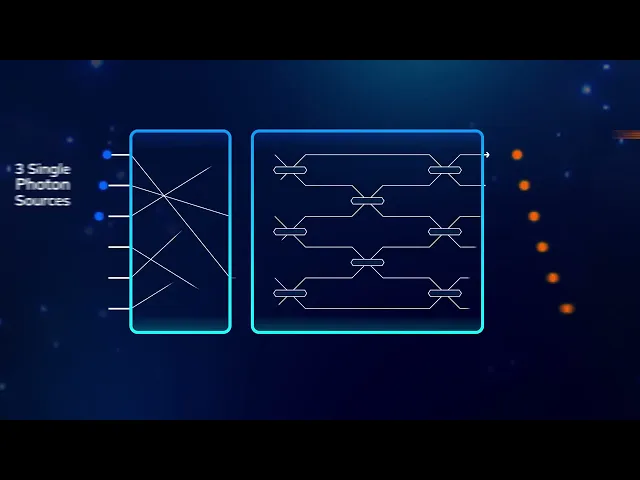
This is a relatively simple photonic quantum algorithm, readily realizable using present-day technology, where the goal is to sample the output photon configurations of a linear optics interferometer.
Post-processing step
These output configurations are then classically post-processed using Coarse-Grained Boson Sampling which maps the exponentially large output configuration space into a polynomial sized one.
Key Features
Post-Classical Energy Advantage
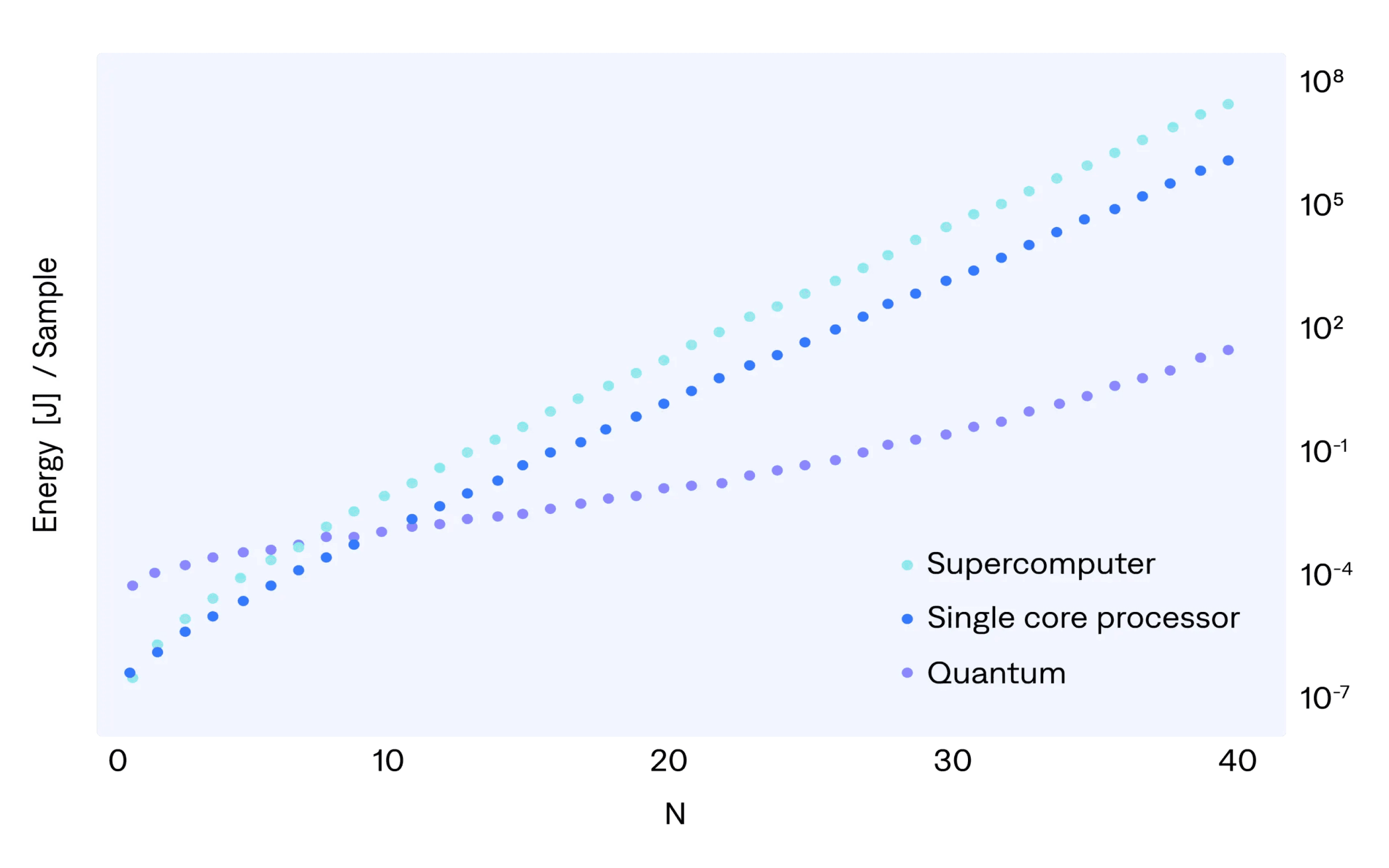
In our article on QPoW’s energy consumption, we describe how quantum samplers for a certain number of miners on a blockchain could save energy by orders of magnitude compared to the analogous classical simulation.
Future-Proof Quantum Protocol
QPoW is a quantum protocol for blockchains that is designed with considerations that anticipate and mitigate potential challenges or advancements in quantum technology. The quantum hardware used in the scheme offers substantial speedup against any classical machine.
Applicable with Present-Day Quantum Technology
QPoW is a quantum protocol for blockchains that is designed with considerations that anticipate and mitigate potential challenges or advancements in quantum technology. The quantum hardware used in the scheme offers substantial speedup against any classical machine.
Table of contents
Comparisons
Classical PoW methods
The tremendous speed of the devices needed to solve the inverse-hashing problem comes at the cost of large power consumption. As the hashing power of the network grows, it increases the energy cost per transaction. The reason is that for asset-based cryptocurrencies like Bitcoin, as the overall network hashing power grows, the difficulty of the one-way function is increased to maintain a constant transaction speed. As of April 2024, a single Bitcoin transaction had the equivalent energy consumption of an average U.S. household over 37.18 days.
QPoW
Substituting energy - intensive inverse - hashing with a similarly defined quantum problem based on boson sampling, the QPoW can achieve the same outcome(distributed consensus) using orders of magnitude less energy than a corresponding network of classical simulators solving the same problem.While the net energy consumption of blockchain networks has numerous contributing factors, a recent blog post by BTQ explains energy consumed by quantum samplers for a certain number of miners on a blockchain that can save energy up to orders of magnitude when compared to the analogous classical simulations.
Classical schemes do not factor in quantum systems from miner resources. Quantum computing technology, while only at the prototype stage now, is rapidly developing. Quantum computers running Grover’s search algorithm can achieve a quadratic speedup in solving unstructured problems like inverting one-way functions. This means if they were integrated into PoW, the progress-free condition would no longer apply and the probability of solving the problem grows super-linearly with computational time spent. This can distort network dynamics in a variety of ways.
As the protocol is already inherently quantum there are no further shortcuts akin to Grover’s algorithm.
Every sample taken from a boson sampler is independent of previous samples, upholding the progress-free condition.
How Does it Work
What is Boson Sampling?
Boson Sampling is a non-universal NISQ-era architecture for optical quantum computing with comparatively straightforward engineering requirements - a passive optical interferometer with photon sources and photo-detectors. Since it is a highly restricted problem, its utility has been questioned for several years. Recently, boson samplers were demonstrated to have outperformed an equivalent classical simulation by orders of magnitude!
Why Proof-of-Work Matters
BTQ researchers have demonstrated the applicability of boson sampling to the problem of proof-of-work (PoW), a distributed algorithm used in blockchain protocols such as Bitcoin. Classical algorithms are known for their computationally intensive inverse-hashing problems that consume vast amounts of power, bringing blockchain technology under major criticism.
How QPoW Works
In BTQ’s QPoW protocol, this energy-intensive inverse hashing problem is substituted with one based on boson sampling. Each classical node is replaced by a quantum counterpart, where light sources are passed through an interferometer, and the output configuration is detected. Since the output configuration is inherently random, several samples are collected and the data is manipulated to reach consensus using different binning strategies.
This protocol has demonstrated that a blockchain network comprising quantum nodes performing QPoW can achieve the same outcome (distributed consensus) using orders of magnitude less energy than a corresponding network of classical simulators.Below is a step-by-step guide to the protocol

01
A transaction is created in the network.
02
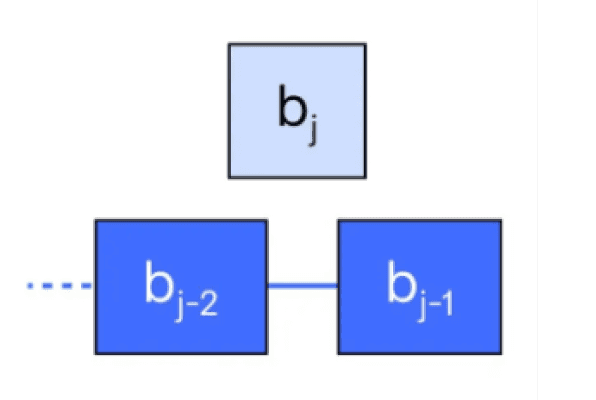
A new block representing this transaction is created.
03
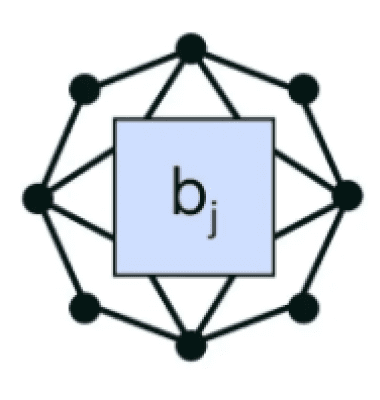
This new block is sent to every node in the network. All nodes stake token to participate.
04
Miners implement boson-sampling, committing all samples.
05
All contributed samples are combined to create a net sample set. These are binned according to a binning strategy determined by a post-quantum secure random beacon.
06
Following verification of binned samples all honest miners in the network are rewarded for their proof-of-work proportional to the number of honest samples committed. Dishonest verifiers are penalised via loss of stake.
07
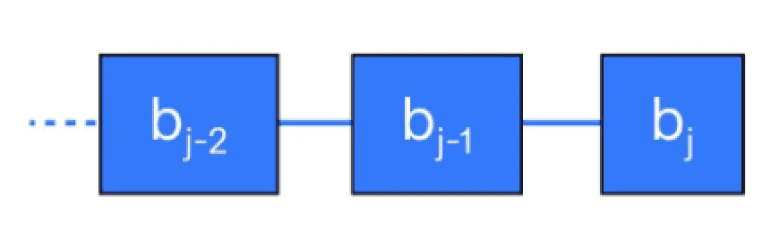
The new block is finally added to the blockchain.
Quantum PoW
The protocol" is our solution to creating energy‒efficient and post‒quantum secure blockchains of the future. This video broadly explains how we plan to implement it in the near‒future, as a successful and reliable decentralized network to validate transactions.
Inquire about QPoW
Fill out form below, and a member of our team will connect with you soon. Your journey into the future of quantum secure technology starts here.
General Inquires
Investor Relations