
filters
The Dawn of Quantum Mechanics
Quantum Mechanics, a branch of physics that delves into the behavior of the smallest particles in the universe, began its journey in the late 19th Century. This marked the start of a field that would eventually lead to the concept of quantum computing.
The 1960s: The Genesis of Quantum Money
1969
Quantum Mechanics, a branch of physics that delves into the behavior of the smallest particles in the universe, began its journey in the late 19th Century. This marked the start of a field that would eventually lead to the concept of quantum computing.

Stephen Wiesner in 1988
Credit: International Centre for Theoretical Physics. CC BY 3.0 DEED
The 1990s: Algorithms and Theoretical Breakthroughs
1994
A groundbreaking year, as Peter Shor presents an algorithm capable of efficiently factoring large numbers. Known as Shor’s algorithm, this poses a theoretical threat to the foundations of modern encryption.
1995
Peter Shor provides a quantum error correction code for correcting an arbitrary single qubit error.
1996
Dorit Aharonov and Michael Ben-Or (and independently Manny Knill, Raymond Laflamme, and Wojciech Zurek) propose a way to perform fault tolerant quantum computation which allows for arbitrary long quantum computation when the physical error rate is below a threshold value.
1996
Lov Grover introduces an algorithm designed for quantum computers that significantly improves the efficiency of searching databases, later named Grover’s search algorithm.
1996
Seth Lloyd proposes a quantum algorithm for simulating quantum-mechanical systems, expanding the potential applications of quantum computing.
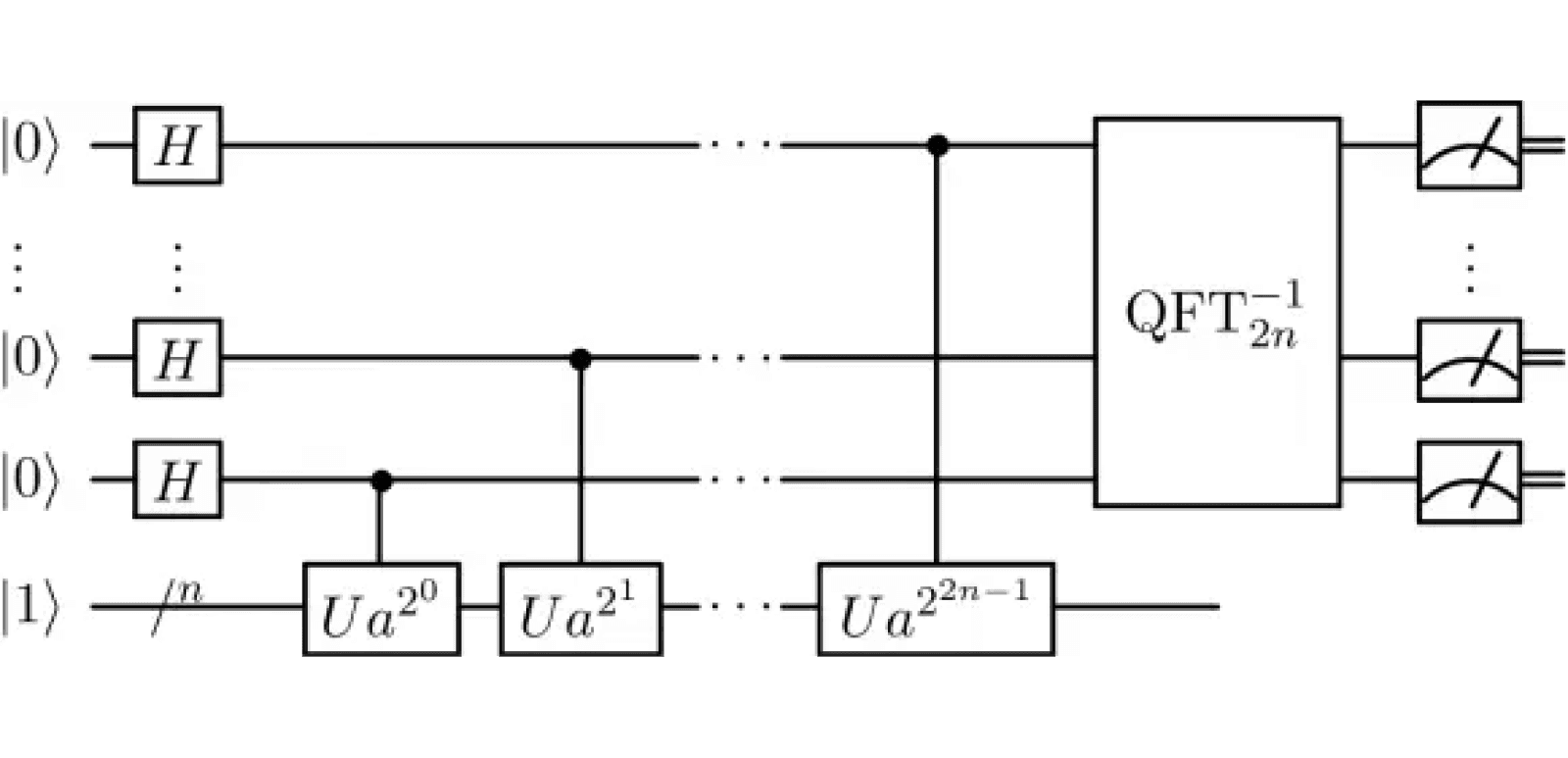
Quantum subroutine in Shor's algorithm
Credit: Bender2k14. CC BY-SA 4.0
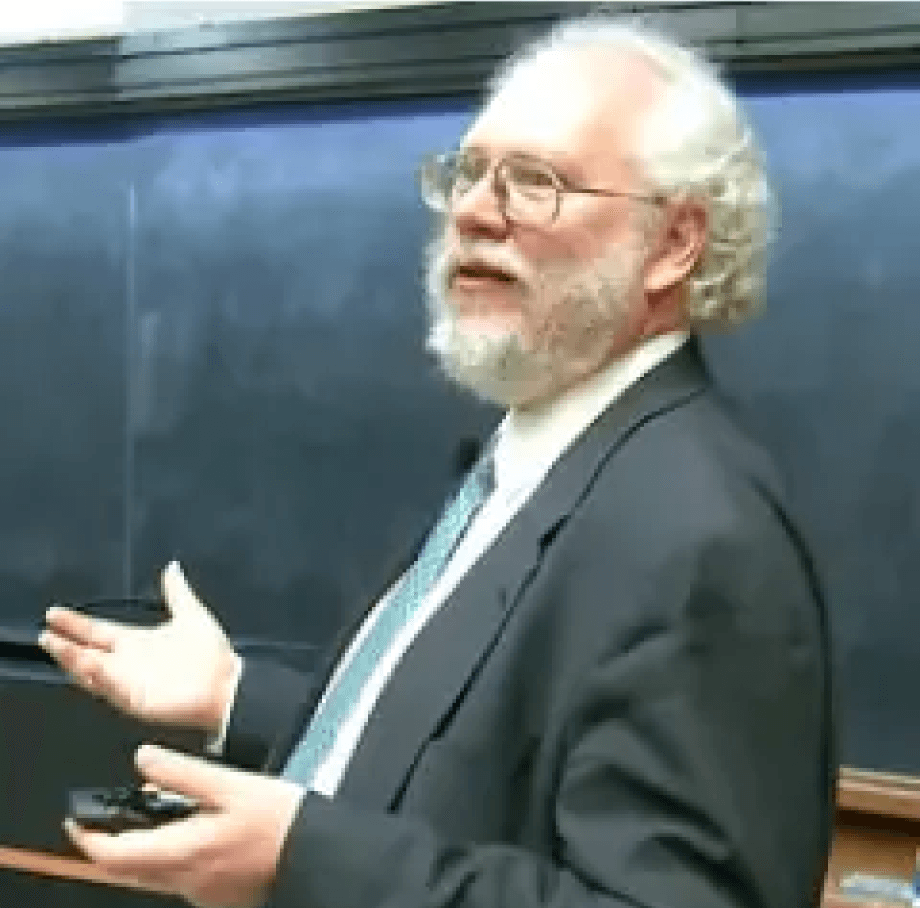
Peter Shor in 2017, International Centre for Theoretical Physics
Credit: Hazihazi. CC BY-SA 4.0
The Late 1990s and Early 2000s: Towards Realization
1999
The founding of D-Wave Systems by Geordie Rose marks a pivotal step towards commercial quantum computing.
2000
Eddie Farhi at MIT introduces the concept of adiabatic quantum computing, further diversifying the approaches to quantum computation.
2001
IBM and Stanford University collaborate to successfully implement Shor’s algorithm on a 7-qubit processor, factoring 15 into its prime factors.
2010s: The First Commercial Quantum Processors Go Mainstream
2010
D-Wave One, the first commercial quantum annealer, is released, signifying a major leap from theory to practice.
2016
IBM makes a historic move by making quantum computing accessible on the IBM Cloud, opening up new possibilities for research and development.
The Late 2010s: A Quantum Leap
2019
Google claims to have achieved quantum supremacy, a term coined by John Preskill in 2012, to describe the point at which quantum computers can perform tasks that surpass the capabilities of classical computers.
Today: The Quantum Present
As of today, quantum computers are often likened to the early days of classical computing, analogous to the vacuum tube era. We stand at the threshold of developing useful and scalable quantum computers, poised to unlock unimaginable computational potential.